Custom Foundation Brushes: Define the Application Brief
A customized foundation brush should be developed around a clear application objective. Broad promises about every skin type are less useful than a specific working brief.
A customized foundation brush should be developed around a clear application objective. Broad promises about every skin type are less useful than a specific working brief.
Describe the task the brush must support
Identify whether the priority is broad application, access to smaller areas or controlled blending. State which liquid, cream or powder textures the range is intended to support.
Use that brief to compare head shapes and proportions. A design that works well for one task may be less convenient for another, so avoid requesting one tool that is assumed to do everything equally well.
Evaluate control as an assembled product
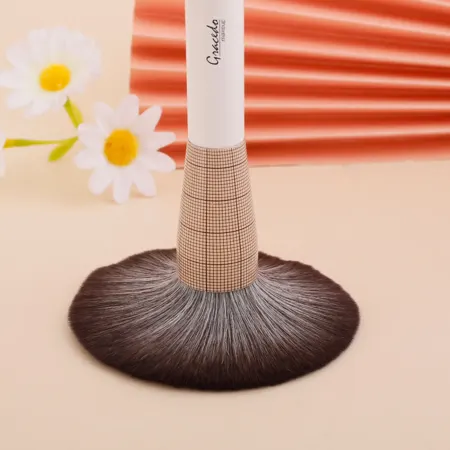
Compare grip area, handle balance and the response of the head to normal pressure. Record the geometry of the preferred sample, including head width and exposed fiber length.
Check ferrule alignment and the handle joint before judging the decorative finish. A custom color or logo should be applied to a tool whose basic construction has already been approved.
Keep claims within the review results
Do not turn a sample impression into a guarantee of no product waste or a flawless result for every user. Use factual construction information and clearly supported performance statements. Finalize care instructions and packing protection with the sample so that the product specification covers the customer’s complete experience.
Before approving the order
- Name the intended task and formulas.
- Compare balance and head response.
- Approve claims, care and packaging with the tool.
Keep reading
Foundation Brush Ranges: Connect the Tool to the Customer Routine
Choose foundation brush variants through application roles, understandable instructions and carefully controlled changes.
Read the story
Brush Sourcing at Trade Fairs: Separate Inspiration from Commitments
A practical method for comparing exhibition samples and turning fair conversations into written product decisions.
Read the story
Beauty Exhibitions and Local Markets: Ask Questions Before Assuming Demand
Use regional trade-show inspiration to develop a research brief rather than repeat unsupported market predictions.
Read the story
Join the conversation
Share your thoughts below. Comments appear after review.