Brush Logo Placement: Check Orientation in the Customer’s Hands
Review custom branding as part of the real brush format, including grip, packing and small print areas.
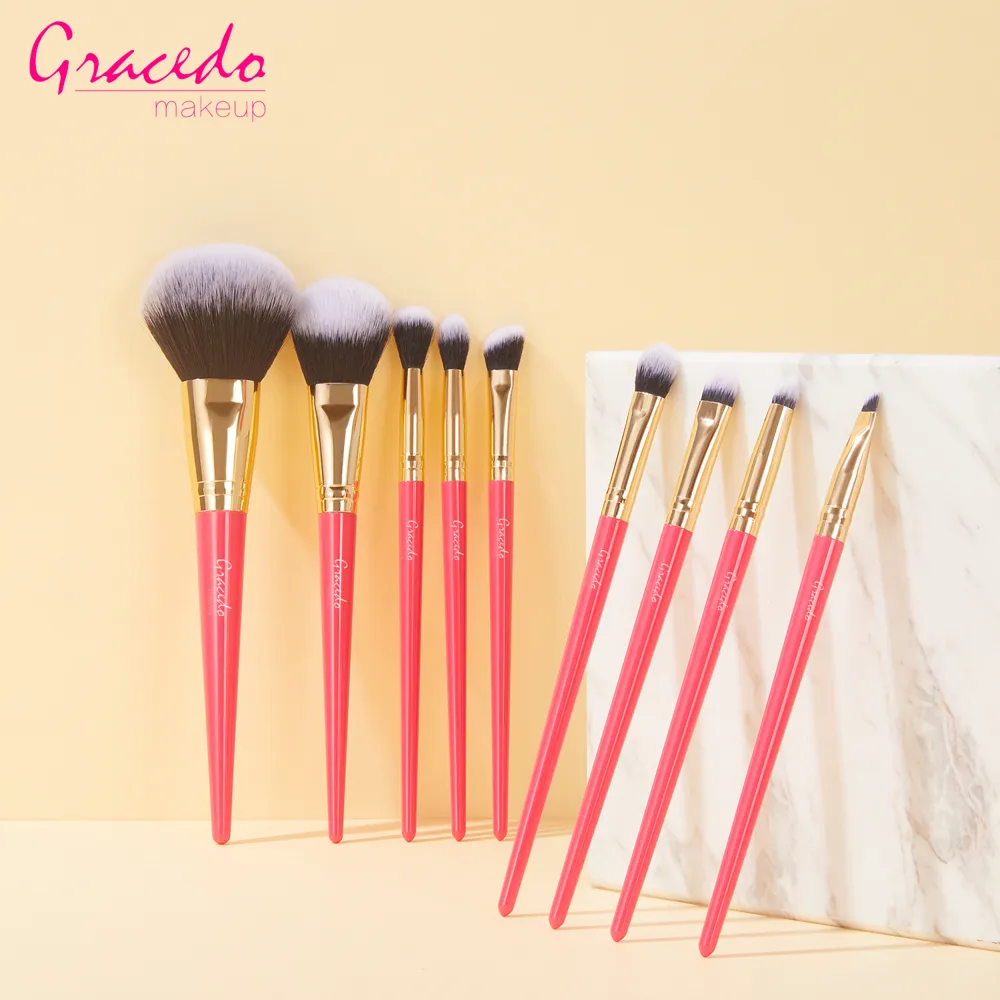
Ask for the actual decoration space
Request a drawing of the handle’s available print area with its dimensions and orientation. Identify any taper or surface feature that limits placement. Provide the intended artwork and ask which details are represented by the proposed proof. Keep each handle size separately referenced so a layout approved on a large brush is not automatically applied to a smaller one.
Review the mark in context
Inspect a physical decorated sample at normal viewing distance. Check how the logo appears when the brush is held, placed in a case and shown in product photographs. If the design includes a role name, confirm that it remains legible. Keep artwork evaluation separate from the working head’s approval so the team can resolve a decoration issue without obscuring the functional selection.
Store the final relationship
Link the approved file, print position, color reference and handle specification. If the handle finish or dimensions change, ask whether another proof is required. Keep superseded artwork away from active production files. A clear placement record helps suppliers and internal teams maintain a recognizable presentation without relying on a screenshot that may not show the final construction or scale.
Buyer checklist
- Measure the print area on every handle.
- Check orientation during real handling and packing.
- Link artwork files to the selected handle version.
Keep reading
Foundation Brush Ranges: Connect the Tool to the Customer Routine
Choose foundation brush variants through application roles, understandable instructions and carefully controlled changes.
Read the story
Brush Sourcing at Trade Fairs: Separate Inspiration from Commitments
A practical method for comparing exhibition samples and turning fair conversations into written product decisions.
Read the story
Beauty Exhibitions and Local Markets: Ask Questions Before Assuming Demand
Use regional trade-show inspiration to develop a research brief rather than repeat unsupported market predictions.
Read the story
Join the conversation
Share your thoughts below. Comments appear after review.